






About

Obsessionistas is a cultural website focusing on the role collections play in relating personal narratives, sharing heritage, tracing design history & inspiring creativity.  more>>

News

Views

As featured in

 must-follow design twitterati list

Our Bookshelf

Collections
Sunday
Apr142013

Images of Collections #0131

The Collector: Jim Golden, Portland, Oregan, USA

The Collection: Images of collections

The story behind the collection...

I’m a professional photographer based in Portland, Oregon. Photography is my business, but also my art and lifelong passion. I started taking photos when I was a kid, mostly of my friends skateboarding and graveyards, old weathered barns, etc, typical high school photo subject matter. My dad was a fairly serious amateur photographer and would shoot slide film and I remember a fair amount of slideshows when I was a kid, so I guess that rubbed off.

These days I work out of my studio in Portland, commercially, I shoot a lot of footwear and sportswear for clients like Nike, adidas, Keen, Giro,  some agency work and some editorial, some portraits. One the personal side I like to make portraits of people, still life (ie the collections), I also love to photograph cars on the street and vernacular architecture.

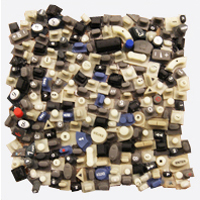
I suppose I'm more of an a archivist than a collector of 'things'. I collect images of collections! I used to collect a bit more, but I don’t have a lot of room these days, so I try to keep it paired down. Lately I’ve noticed my drawer of defunct technology objects getting more full, I’ve started calling it my Technology Museum, this is my latest collection of interest.

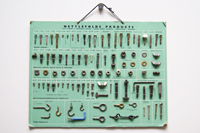
A lot of these items are special to me or the person that collected them, so I feel they deserve an elevated treatment. It also starts to make the objects interesting on a more basic level - patterns, color, shape. Most of the images take on a life of their own when printed larger, say 1-2 meters, then you can really dig in and take a look or from a distance they form interesting patterns. I've been photographing objects from above commercially for years, so this is a logical extension of that work into my personal photography.

I suppose they all 'tools of the trade' so to speak - whether work or leisure. The scissor collection is amazing to handle, you can see all the wear and tear on the items. Same with the hunting/rifle collection.

One of my favorite things to do, photographically, is to elevate an ordinary (singular) object into an extraordinary object by making an exquisite image of it. At the same time, making the images solves my curiosity to get really close and handle interesting objects, to get more of a sense of the character of the object as well and portray that to the viewer.

The chainsaw is all oily and dirty in the larger print and you see that patina, you can almost smell the wood being cut and the hot oil from the chainsaw. Same thing with firearms on black, they look beautiful, and menacing, but have interesting shapes and patterns on them too.

I try to photograph the objects as straightforward as possible as to not distract from their character. I use one light source and keep any post to a minimum. For the items on black, I use a high quality velvet as a background, it eats up any stray light. Again, I use one light and use fill cards as needed to subtly sculpt the light, then paint the multiple exposures together in photoshop. I try to keep the post to a minimum, I really want a strong image out of the camera.

The collection images are photographed with camera overhead, with one strobe, bare bulb, from overhead in line with the camera or slightly offset if I want the shadows to fall to one side or the other. In some instances, I’ll bounce a strobe into the white wall or ceiling in my studio to great a more diffused shadow, so the shadow will not distract from the objects (ie the scissors and the locks).

For some of the collection images, I work with a collaborator, my friend and stylist Kristin Lane. Kristin and I did the cameras, camping, rifles, musical instruments, beachcomber and houseware images together, among others. She has a great eye for selecting objects and the patience of a saint to arrange them all.

I never really thought of them representing a slower paced life, but there is a good bit of nostalgia in most of the images – I think this is one of the reasons to why people relate to them as well. I do enjoy the shoots as the pace is very slow building the compositions, much unlike my commercial work which can be a bit more harried. I don’t mind getting my hands dirty either. I’m a terrible gardener and a mediocre carpenter but I will always give it a shot. I worked on cars a lot as a kid, I can do that fairly well. If I get in over my head, I call in the pros, I learned that a long time ago from the photo business.

When I was in New York, I wasn’t shooting commercially yet and my personal photography was much less focused. I was very busy working as a retoucher, so I needed some space from photography. I mostly photographed architecture and landscapes when I traveled and a lot of NYC from the street, more like a diary than anything else. All film or Polaroid, I was heavy into the SX-70. Portland and the Northwest have influenced my photography, but not really from a lifestyle aspect, more from it being such a different landscape, weather, etc.

I have a bunch of different projects ongoing at the moment too. I’m continuing my series of collections, I have tin toys, vintage bike gear and a few others on deck. I’d also like to get the collection images to move somehow, whether stop-motion or a cinemegraph. I’ve been working on a project about the coast of Oregon and Washington for the past 3 years, that’s forming into an interesting body of work, some of it is on my site. I started a project last summer about churches in unconventional spaces, i.e in a house, a strip mall, warehouse, etc, there are a lot in Portland. I’ll be picking up that project again now that the weather is getting a little nicer. I’m always shooting cars I see on the street, that is a series that I love and get excited about when I run in to a cool car.

You can visit Jim's website here and tumbler here

 You can visit Kristin's website here

all images © Jim Golden and used with his kind permission

Sunday
Mar242013

20th century fashion #0130

The Collector: Sally Hoban, lecturer and writer, Birmingham, UK

The Collection: 20th century fashion

The story behind the collection…

I have been collecting old and unusual items since I was about four years old. My parents were collectors and so I grew up in a house surrounded by antiques, including furniture, ceramics and glass. They inspired my love of antiques and encouraged me to buy small pieces that I could afford with my pocket money. We had the Miller's antiques price guides in our house, which were a wealth of information. I learnt so much from them, so when I was offered the chance to write one of the Miller's guides when I was older I was delighted.


My love of vintage fashions and textiles goes back to when I was about six years old and I loved dressing up. A friend of the family who was an antique dealer gave my mother a 1920s Chinese embroidered piano shawl. It was black silk with long tassels and embroidered all over in vivid reds, greens and blues with motifs of flowers and butterflies. I loved it and would wrap it round me and run around the garden feeling incredibly glamourous. That was the piece that sparked my love of antique and vintage textiles, although I didn't start to collect them specifically until I was about 15.

I used to go to the old Rag Market in Birmingham and antique fairs and auctions looking for 1920s and 1930s pieces. I was also involved in professional theatre when I was younger and would come into contact with antique clothing, shoes, handbags, powder compacts and more in both costume fittings and in the shows themselves, so I learnt a lot about fashion history and individual pieces through the theatre as well. 

My main interest lies in the 1920s and 1930s. Art Deco pattern design was amazing - so vivid, fresh and stylish. I also love the luxuriousness of Deco fashion - flapper dresses covered in beads and sequins, silk velvet jackets with enormous ruched collars, delicate leather shoes with heels inset with rhinestones and floaty, silk chiffon tea dresses in floral patterns, which are timeless and still look beautiful when worn today.

I also love 1960s and 1970s fashions by Emilio Pucci, Louis Feraud and Ossie Clark. My favourite piece of Ossie Clark is a floral Radley blouse with a print designed by Celia Birtwell. Her prints are beautiful and the overall style of this blouse is gorgeous.

Left: Orange Feraud suit. Right: Ossie Clarke blouse

I also love my orange Feraud suit and wear this for working in during the summer. You simply cannot beat the quality of vintage items and tailoring - a suit that might cost £100 in the vintage market today for example could cost you over £1,000 if you were to go out and have it made for you today. I have parted with many pieces over the years but a couple always stand out because I would love to have them to wear now. The first was a rich, plum covered silk velvet jacket from the 1920s with tiny buttons running all the way down the front and the second is a gold sequined flapper dress that was in absolutely mint condition and would look stunning worn today. The piece that I regret not buying was an Ossie Clark blouse in Birmingham's Rag Market in about the year 1990. It was beautiful and in great condition and was priced at just £10. 

Items that I buy usually have to pass the 'would I wear it' test but I do have pieces that are too delicate to wear that are great examples of their kind or that I simply love to look at and display on an original 1920s mannequin.

Shoes are a good example of things being too small to wear - most of the really pretty vintage shoes you can find are in very small sizes so I buy those to display. I also buy pieces that I use to illustrate some of the lectures that I give on the history of fashion and design. I lecture for NADFAS (National Association of Decorative and Fine Art Societies) and take along pieces from my collection for people to see and handle after lectures and during study days on the history of fashion and style. There is nothing like actually handling a piece of vintage fabric or being able to look at how an antique dress is constructed. 

It is always difficult to say which designer may or may not become collectable in the future but as a general rule pieces that are representative of their time or capture a particular moment in fashion or contemporary culture will be the pieces that collectors will want in the future. Vivienne Westwood's early punk pieces are a great example of this as are Utility label fashions from the 1940s. Horrockses floral cotton dresses from the 1950s are absolutely typical of the best in 50s fashion and were also made from high quality fabric so they have become extremely collectable. Pieces made from fine quality fabrics and materials such as silk, cashmere and wool will stand the test of time as well. Collectable vintage now wasn't necessarily expensive when it was made. Paper dresses from the 1960s for example were designed to be fun items that captured the spirit of the time and not that many have survived because they were so delicate if worn so they are now very collectable if they have survived. I look for clothes now that are designed well, have a great pattern or an unusual construction and have been made by a recognised or up and coming designer as these may well become pieces of fashion history in the future. 

Visit Sally's website here

All images © Obsessionistas and used with Sally Hoban's kind permission.

Sunday
Mar102013

The internal volumes of 3-pin 13 amp UK plugs #0129


The Collector: Andrew Leith

The Collection: The internal volumes of 3-pin 13 amp UK plugs

The story behind the collection...

It's called 'The internal volumes of 3-pin 13amp UK plugs' as I'm aiming for a title that conveys both precision and an aloof conceitedness

It all started about 20 years ago when I was at college. I was playing around with mixing resin and car-body filler to create a kind of easy to use pourable setting plastic.

I was filling a mould with this mix and had some spare mixture I didn't want to waste. There was a plug on the desk so I took it apart sealed the holes, poured and that was that.

I liked the result and a few months later when I was 'resting between jobs' decided to try other plugs. I started on my own, liked what was happening and decided to mould all of the plugs in the house. So when my flatmates were at work I would de-plug their electrical goods, cast them, and have the goods replugged before they got home.

The collection really took off when I visited a police auction looking to buy a bicycle and one of the lots for sale was a "bag of assorted 3-pin plugs". I got around 110 for about a fiver.

Initially I started the casting collection because they looked interesting, and it was always a pleasant surprise to see that space rendered in solid. Even though you can try to visualise it, the reality of it always reveals more than you expect. The same as seeing a negative realised into a positive print.

The biggest surprise was when I realised that almost every plug I was casting was unique. Of all the plug castings I made, all are unique. There are over 100 completely unique designs from the collection (the other 40 are different but only by number markings). I found this especially surprising, as all the plug designs are working within a set of tight constraints - size, number and position of the 3 pins, a need to provide a channel for the wires, made by a one piece injection mould... And because the casts are of the insides of the plugs all design considerations I assume must be entirely functional. This is what really excited me. Over 100 solutions to a seemingly simple and constrained issue where any aesthetic merit is incidental.

I think I have cast about 140 in total, but I haven't counted them for a while.

I still own most of the actual plugs themselves (i.e. moulds) too. I have a plan for them, but need a bit of time... and a belt sander.

I have one from the BBC where the earth pin is 'T' shaped rather than rectangular. I think it must be some sort of control on staff bringing in their own things from home to charge. After all that is taxpayers money being spent on that electricity!

They also have to be 3-pin, and from the UK. There's no real logic to colour allocation, it was done randomly because I was thinking about making a collection that looked nice. I regret making that decision though as the real focus should be on comparing the designs of the plug spaces that have been created. Having different colours has introduced a variation that is unhelpful when comparing the plugs.

Am I a fan of 'negative space'? You could say that. I've also cast the insides of electrical goods packaging in plaster for as well. They make great paperweights. In fact, anything that has been made in a one-piece injection mould should be suitable. If they could get the piece out of the moulding machine, you should be able to get the cast out of it - as its like the same process in reverse.

Release agent is a good idea and having an aperture to poke the casting out is useful too (this is where the 3 pin holes came in handy. Without this you need some sort of handle to pull the cast out of the mould - unless the mould is flexible. The most difficult part is the removal of air bubbles without a vacuum chamber. I never really got this quite right.

At the moment they are kept in some boxes in the loft, but my long term plan is to display on some light boxes - one day

I haven't ever exhibited them but they did, implausibly as it sounds, nearly end up in a New Order video.

What do others think about my collection? - raised eyebrows... well when I was single, I was advised not to mention them when in the foothills of courtship!

There's not really any particular plug casts missing from my collection, but I would be interested to know what percentage of the available design varieties my collection represents.

All images © Andrew Leith and used with his kind permission.

Monday
Jan212013

Noggins #0128

The collector:  Mark Pawson, artist and lecturer, London (UK). 

The collection: Noggins

The story behind the collection...

Noggins are handmade Scandinavian tourist souvenirs of Viking figures with wooden bodies and furry beards. They are warlike and cute, fluffy but ready for a fight.


Click to read more ...

Sunday
Jan062013

London Transport Maps #0127

The collector:  Kate Farley, artist, designer and lecturer, Birmingham (UK). 

The collection: London Transport Maps

The story behind the collection...

Graham (from Obsessionistas): I can really see why as a textile designer you like them…

Kate: I have always had an interest in graphics and illustration as well, so although I’m a textile designer I very much bridge the gap and so for me when you see something that is a pattern and its communicating something then I start to get excited about what an image can do, rather than being pure pattern.


Click to read more ...

Tuesday
Jan012013

Sugar Packets #0126

The collector: Clive Probert, Tucson, Arizona.

The collection: Sugar packets (and sugar cube wrappers)

The story behind the collection…

I was born in Birmingham, England and came to Tucson via Toronto, Canada. So now I have quite a mix of cultures and accents. Now that I am retired I enjoy hiking in the Sonoran Desert.

Click to read more ...