


















DESIGN ARCHIVE: JCB

 Design Archive: JCB
Estd. 1945
Location: Rocester, Staffordshire (UK)
JCB is one of the top manufacturers of construction equipment in the world. Since its early beginnings it has invested heavily in design and development and as a result has some of the most advanced engineering facilities available. Employing around 10,000 people on 4 continents, JCB produces a range of over 300 machines sold in 150 different countries. Its design archive collection consists of original engineering drawings, early and more recent machinery, advertising and marketing information, along with early photographic records of significant events. Situated at its headquarters in Rocester, the archive traces the history of this innovative company back to its early connections with industry in the 1820s, when the founding Bamford family were local blacksmiths.
In October 1945 Joseph Cyril Bamford, after famously being fired from the family owned Bamford & Co business, set up on his own in a small lock-up garage in Uttoxeter, Staffordshire. With a second hand English Electric arc-welding set, a pile of scrap air-raid shelter panels and WW2 surplus Jeep axles he set about cutting, forming and welding the steel together to create his own a farm trailer, which he then sold for £45.
 Using his knowledge and enthusiasm for aeronautical engineering he then created the first hydraulic tipping trailer, which was to set the company’s design direction from the late 1940s to the present day. In 1949 with a workforce now numbering six he introduced the Major Loader, a kit based hydraulic ‘bolt-on’ for a Fordson Major Tractor, along with the slogan… “It loads, it lifts, it pushes, it scoops, it scrapes, it bulldozes.’ This machine is recognizable today as what is generally referred to as a “JCB” (even those not made by them); a modern day ‘workhorse’ typifying innovative engineering design thinking and offering almost unlimited versatility in the harshest of conditions.
 A true innovator, Bamford was the first European manufacturer to apply hydraulics to farm trailers, loaders, and excavators. As well as an effective engineer, he was also a clever marketeer, allowing the company to grow rapidly.
 In 1950, JCB moved to an old cheese factory in nearby Rocester, signalling the start of the modern company we recognise today. Soon after they began painting the machinery yellow, followed in 1953 with the still recognisable company logo – originally tapered to fit on the side of an early hay mower. In the same year the company brought out their breakthrough product, the MK1 Backhoe Loader, still in production today (all being in it’s more recent iteration). Also launched in 1953 was the innovative and easily detachable Si-draulic Loader, suitable for Ferguson, Fordson Major, Nuffield and David Brown tractors, followed by the Hydra-Digga – which sold 2000 units by 1960.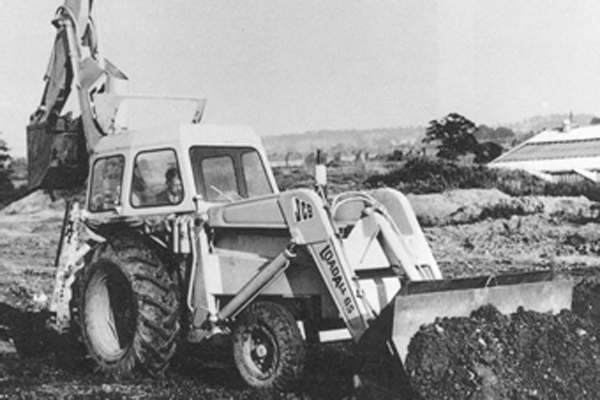
 JCB's hydraulic tractors soon entered the North American market in the 1960s, with much success. It was this year that the famous ‘Dancing Diggers’ display team also started, offering an terrestrial version of the aerial displays popular at air shows the world-over. The drivers are members of JCB's demonstration team, who visit prospective customers and demonstrate machines on the customer's property in order to prove the machine's suitability for the task at hand.
 By the end of the decade Mr JCB (as Joseph had become to be known) was celebrating the company’s 10,000th Backhoe Loader rolling of the production line. In 1969 he was subsequently awarded the CBE for Services to Export.
 Dumper trucks, Crawler Loaders, Crawler Excavators, Telescopic Handlers, Articulated Wheeled Loaders, Mini Excavators and Fastrac tractors were just a few of the engineering innovations to follow the successful Backhoe loaders, along with many other machines and a highly efficient spares and back-up service to keep the machines operational.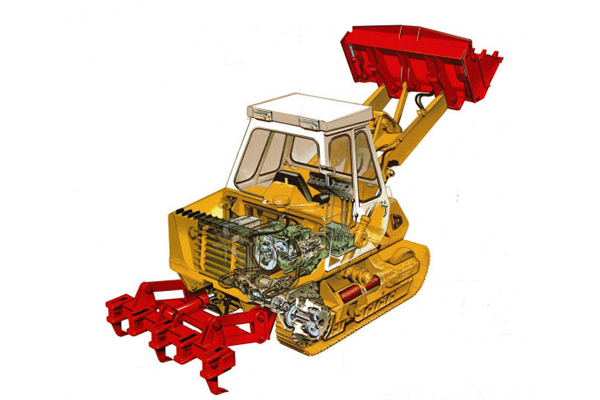
 In 1975 Joe retired, handing over the business to his sons. Anthony Bamford became Chairman and Managing Director and continues to run the business today.
 After living abroad during his retirement, Joseph Cyril Bamford died in London in March 2001. By then, JCB was the largest privately-owned engineering company in Britain employing 4,500 people and manufacturing 30,000 machines a year in 12 factories on three continents.
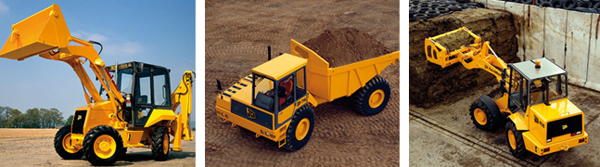
 Today, JCB contiues to design and innovate from its original factory location in Staffordshire, in one of the most modern engineering factories in the world.
 The Rocester works are surrounded by 10,000 acres (40 km2) of landscaped grounds, conceived to allow the company's employees to be also able to shoot, fish, swim, and sail.
In 2000 a JCB factory was completed in Pooler near Savannah, Georgia (USA), another opened soon after in Brazil and in 2005, JCB opened a new factory in China at Pudong close to Shanghai.
 Along with organized factory tours at the company’s headquarters, visitors can also experience ‘The Story of JCB’ - a permanent exhibition that reveals a wealth of engineering design from the company’s archive collection. There are links with industry back to the 1820s, when the Bamford family were blacksmiths in the local town of Uttoxeter, and exhibits (huge, large and small) charting the company’s evolution up to the present day - including JCB’s latest range of machines.
 The exhibition space also explores the company’s design and innovation ethos, its growth as an agricultural machinery manufacturer, the success of JCB military products, the development of the JCB engine and world record-breaking DIESELMAX car (reaching 350mph in 2006), and above all, JCB’s continued growth to become a global brand and one of the world’s leading names in manufacturing.
 As Anthony Bamford aptly reminds us, “Since JCB began in 1945, we have always been driven by innovation and that is at the very core of ‘The Story of JCB’. It is a unique story of constant investment in our 11 factories in the UK and continual expansion abroad to become one of the world’s largest manufacturing companies.”
 Obsessionistas would like to thank Adrian Hall and Andrew Henderson of JCB, for helping us gain access to the company’s rich design archive collection and history.
Visit the JCB website here
All images © JCB and published with their kind permission.